NEVER Play Blues Licks Like This!

Playing blues licks is probably one of the most commonly performed things that guitarists will do when they practice. Blues licks are fun and they sound great! The problem is that they are all too often performed with very little of the true feel and emotion that they deserve...

In this video, I’m going to show you how to never play blues licks without feel or emotion again and I'll give you the fixes for the 4 most common mistakes players make when they're practicing blues licks.


BETTER BLUES LICKS:
Whether you can do a hundred blues licks right now, or you struggle to do just one, you’ll find this lesson incredibly helpful. And, I guarantee that you will be doing blues licks better by the time the video is over.


Today we’re talking about Blues licks and my main directive for you to develop from them further in your playing is to make sure that you’ll start playing Blues licks (from here on out) with more; style and feel and dynamics.

I’m not worried (at this point), how advanced you are with playing Blues licks, I don’t even care if the Blues licks I’m going to show you in this video are the first ones that you’re ever even learning! The main thing is that you stop playing your Blues licks with a dead feel to them.

I want that "lifeless" approach to end, because playing with no feeling is not introducing the dynamics that lead you to a richer sound in your musical ability and in your personal feel.

I would like to have you play your Blues licks from a new perspective, one that is way more focused on HOW the Blues licks sound!


ADDING MORE EMOTION:
This lesson will be all about discovering ways in your guitar playing that will help you to avoid musical sound that lacks both emotion and feel. We don’t want to play Blues ideas without any emotion. That's what we're trying to avoid.

So, instead of only being fixated on the notes of a lick and where and how the lick looks on the guitar, (as well as, what fingers you are using to play notes), we’re going to instead fixate on the use of phrasing devices and musical arranging ideas to help expand on the sound of the licks.

Let’s get things started by learning an example Blues lick that has no phrasing at all. And then, we’ll use that example to start moving forward with phrasing concepts and with arranging ideas to help increase the sense of emotion and promote a greater sense of feel from the example Blues lick.


Example 1). The Foundation Lick:
played very straight and without any feel – no emotion.


Example 2). (GHOSTING NOTES)
The inclusion of slides simple bending and hammer-on.


                         ____________________________________________________

I wanted to take a minute to let you know, that if you want to learn even more about scales and theory I have a great offer for you.

With any donation over $5, or any merchandise purchase from my Tee-Spring store, I’ll send you free copies of THREE of my most popular digital handouts.

One is called, “Harmonized Arpeggio Drills” (it’ll train you on developing your diatonic arpeggios).

Another one is my “Barre Chord” Handout which includes a page showing all the key signatures along with a chord progression that applies barre chords.

Plus, you’ll get my Notation Pack! It has 8 pages of important guitar worksheets for notating anything related to; music charts, guitar chord diagrams, and TAB.

As a BONUS, (from my "Over 40 and Still Can't Play a Scale" video), I'll also throw in a breakdown of all of the chords that are diatonic to the "F Major" scale.

As an EXTRA BONUS for my Phrygian Dominant video, I'll also throw in a breakdown featuring all of the chords that are diatonic to the Phrygian Dominant scale.

Just send me an email off of the contact page of CreativeGuitarStudio.com to let me know about either your donation or your Merchandise purchase and I’ll email you those digital handouts within 24 hrs.    

                       ____________________________________________________


Example 3). (BENDING)
The focus is on bend release and full bends


Example 4). (2-NOTE CHORD IDEAS)
The creation of “2-note style chord ideas” for more punch and attack.


Example 5). (OPEN STRING PHRASING)
Introducing open string phrasing that match the notes of the scale /key


CONCLUSION:
The main thing to walk away from this lesson with is to NEVER leave Blues licks sounding flat without any feel or devoid of emotion.

Blues is the style of emotion! So, try something different with your Blues licks and make that different idea, (whatever it may be: Bends, Slides, Ghost Notes, Hammer-on's, or Pull-off's, or Vibrato, open string concepts).

Whatever it is, make sure to include different phrasing and dynamic ideas through your Blues licks and have this philosophy as a priority to accomplish going forward.

Every great guitarist has a certain sense of style to their phrasing that they’ve devoted a lot of time to perfecting.

And, when you focus on building your style - that work ULTIMATELY will be what separates you (and your licks - whatever style they might be in), it’ll separate YOU and what you play - from every other guitarist out there!


___________________________________________________

GET GOOD NOW - JOIN THE MEMBERS AREA

Join Now

Guitar Chords | F Chord | Guitar Notes | G Chord | C Chord | D Chord | Guitar String Notes
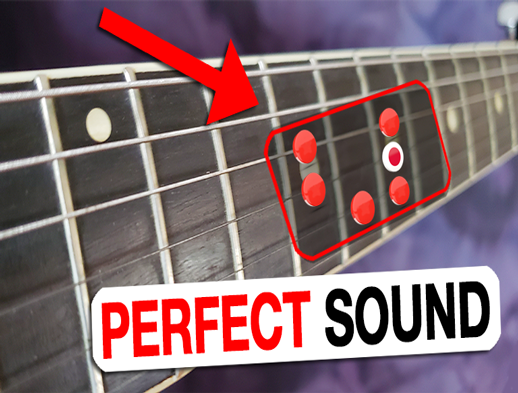
Play INSTANT Solos with Just ONE Little Shape!


If you've ever tried to play a guitar solo you probably found out rather quickly how difficult it is to do well. To play a guitar solo it takes both physical and musical ability combined with creativity, but how can we study doing this?


If you don't have the basic skills, combined with the knowledge of scales, keys, and modes, not only will the melody lines of your solos suffer, but you could wind up frustrating yourself as you attempt to have success with doing any soloing at all.


That said, imagine if you had a quick weapon in your practice arsenal that allowed you to quickly make the pain of not being able to play a solo go away. What if there was a practice method to help you start soloing that would allow you to successfully play lead guitar? Well, you're in luck because I’m going to show you exactly that in this video.


WATCH THE VIDEO:


You’ve probably experienced the feeling of not knowing how or where to start when it comes to playing a solo. And, I’ll bet that in the last year you’ve experienced not knowing what to do when it comes to playing a guitar solo that applies different tonalities – like; Major, Minor and the Modes.


There’s nothing more crushing for your guitar practice sessions than when you just can’t get anything good to come out as you’re trying to make up a solo. But, the good news is that today, we're going to actually do something about it.


TAKE STOCK OF YOUR SKILLS:
If you can’t play a solo, there’s likely a series of ideas that you need to examine more closely in your playing before going any further.


These ideas would be things like making sure that you know about how the musical keys relate to both chords and to the notes of a scale. If you don't know the basic theoretical framework, it's going to be tough going.


Also, ask yourself, are you good at properly playing notes so that they sound clear, and that they have a good sense of feel and phrasing? If you lack phrasing skills, connecting musical lines will be difficult.


The last area to focus taking stock on is all about how good your sense for rhythm is along with how good your feel is overall for the musical groove of the beat in time.


If you think that you’re already doing well with these ideas, then you’re probably ready to move up to the next level.


HITTING THE BEST NOTES:
When it comes to playing a really nice melodic guitar solo, the next level of work, (after becoming clear on the points I’d mentioned a moment ago), will involve training your ear to be able to hit the right note at the correct spot in your music.


To do this, you have to build the skill for learning how to anticipate the arrival of the best note – at the best time during your solo. I know it sounds like its complicated. But the way that you learn this is you train your ear how to naturally hit on the best scale tone for the chord being performed at a select point in time.


One of the best ways to learn how to do this is with a small scale shape, (not with big scale shapes, but with small scale shapes). Let’s learn exactly how this works on the guitar by using one scale shape and then shifting the root note across the scale to affect the tonality.


MAJOR SCALE:
Our first example is going to use the sound of “Major.” The small shape that we’re going to learn looks like this…


Small Shape: Major


Shape Application:
The next step is to be able to start training your ear so that it has the ability to listen to and also match up with the sound of any key to create a melodic guitar solo.


You need to be able to practice applying the sound of the key so that the associated scale connects into the backing chord harmony.


Jam-Track (Major):
I’ve set up a simple jam-track chord progression in the key of “C Major” to help you learn how to study this kind of soloing practice. Here’s how it all comes together when we practice applying these soloing ideas.


Learn how the example progression below operates and develop your skills for performing it on the guitar. Then, start studying what it’s like to jam over the chord changes so that you begin to compose well formed melodic phrases over the jam-track chord harmony.


                         ____________________________________________________

I wanted to take a minute to let you know, that if you want to learn even more about scales and theory I have a great offer for you.

With any donation over $5, or any merchandise purchase from my Tee-Spring store, I’ll send you free copies of THREE of my most popular digital handouts.

One is called, “Harmonized Arpeggio Drills” (it’ll train you on developing your diatonic arpeggios).

Another one is my “Barre Chord” Handout which includes a page showing all the key signatures along with a chord progression that applies barre chords.

Plus, you’ll get my Notation Pack! It has 8 pages of important guitar worksheets for notating anything related to; music charts, guitar chord diagrams, and TAB.

As a BONUS, (from my "Over 40 and Still Can't Play a Scale" video), I'll also throw in a breakdown of all of the chords that are diatonic to the "F Major" scale.

As an EXTRA BONUS for my Phrygian Dominant video, I'll also throw in a breakdown featuring all of the chords that are diatonic to the Phrygian Dominant scale.

Just send me an email off of the contact page of CreativeGuitarStudio.com to let me know about either your donation or your Merchandise purchase and I’ll email you those digital handouts within 24 hrs.    

                       ____________________________________________________


MINOR SCALE:
Our next example is going to be using the sound of “Minor.” And, the small shape that we’re going to use - looks like this…


Small Shape: Minor


Minor keys are actually related to the original “Major” key. In music theory we call this idea, “Relative” scales. When learning how to play Minor ideas, one of the first things that you'll notice is that the minor scale looks exactly the same geometrically as the Major scale.


The difference is in two areas. The first, is which note we focus on as the “Root Note.” In the specific case of our example the note of "A" (4th string /7th fret), has become our focal point for the creation of minor tonality.


The second area of importance, is the way that the chords will come together under the backing track harmony to function in a way that creates a strong harmonic backdrop in the Minor Tonality.


Jam-Track (Minor):
Below is a short chord progression that we can use as our "A" Minor Tonality backing track. Our work will be focused on learning to properly apply the sounds of the “Minor” scale shape over this key of "A" Minor tonality jam-track to help train us to build a melodic guitar solo.


MIXOLYDIAN MODE:
Our next example is going to use the sound of a popular mode called “Mixolydian.” The small shape that we’re going to use looks like this.


Small Shape: Mixolydian


Mixolydian mode is another related scale. It’s based upon our original geometrical pattern of “C Major” (that we had started with). And, just like with our use of the “A” Minor shape (which took the note of “A” on the 4th string as the root to create Minor), Mixolydian takes the note of “G” on the 4th string to allow for the creation of the sound of Mixolydian.


This is an interesting concept when learning musical keys because the notes can all stay the same but when the roots (scale start points) shift they produce a new melodic direction.


Everything is tied to the chord progressions that are performed as backing tracks. The resolution points of the progression will always point to the quality and formation that will ultimately establish what scale idea to use for soloing.


Jam-Track (Mixolydian):
Below is a short chord progression that we can use as our "G" Mixolydian Mode backing track. Our work will be focused on learning to properly apply the sounds of the “Mixolydian” scale shape over this key of "G" Mixolydian mode (Major tonality), jam-track.


Then goal is to help train yourself on how to build a melodic guitar solo using Mixolydian.


DORIAN MODE:
Our final example is going to use the sound of another popular mode called “Dorian.” The small shape that we’re going to use looks like this.


Small Shape: Dorian


Dorian mode is another related scale that’s also based upon our original geometrical pattern of “C Major.” And, just like with our use of the “C” Major shape (which took the note of “C” on the 3rd string as the root to create Major), Dorian will take the note of “D” on the 3rd string to allow for the creation of the sound of Dorian mode.


Next let’s learn how we can establish a backing chord progression that will help us to play solos in Dorian.


Jam-Track (Dorian):
Below is a short chord progression that we can use as our "D" Dorian Mode backing track. Our work will be focused on learning to properly apply the sounds of the “Dorian” scale shape over this key of "D" Dorian mode (Minor tonality), jam-track.


Then goal is to help train yourself on how to build a melodic guitar solo using Dorian.

_________________________________________________________

Get Good Now!


Join Now

Guitar Chords | F Chord | Guitar Notes | G Chord | C Chord | D Chord | Guitar String Notes

This is How I Learned ALL My Basic Music Theory (JUST DO THIS!)

If you are like a lot of Beginner and Intermediate guitar players, then you are probably experiencing some confusion about where exactly to start when you're trying to work on Basic Music Theory. If this sounds like you, then you need to watch this video...


In this lesson, I’m going to show you the best way to start into learning basic music theory. Plus, I will also show you how to understand Major and Minor chord quality once and for all.


Everything starts by learning about Major and Minor 2-note chords (intervals). Let me explain, these 2-note chords (intervals) are the building blocks for everything else that happens in music. Once you learn how these 2-note ideas can build up to bigger principles, you'll start to comprehend how everything else fits together.


IS THEORY COMPLICATED?
Music Theory (of any kind) is generally thought of as a complex topic for a lot of Beginners, (as well as, for Intermediate students). And, one of the reasons for that thought is because a lot of guitar players have problems with Theory. This is often caused by the fact that they aren’t often unsure of where to start with learning it.

Most books will suggest starting with key signatures, which is good! But, I’ve also noticed that (for myself and others) it can be nice to actually use the guitar fingerboard to start learning music theory.

That way, you can keep track of everything by associating everything to what you know about the guitar neck, and how the details about music theory can be laid-out on the guitar.

In this lesson, we’re going to break down one of the very first music theory assignments that I was ever given. It served as the beginning for all of the theory that I studied after!

In this lesson, we’re going to work on the two primary qualities of musical sound, and how they look on the neck.


THE FIRST STEP - TWO NOTE CHORDS:
There are two entry level chords that we often start learning music theory with. One group is called “Dyads,” (which are 2-note chords), and the other group are the “Triads,” which are of course 3-note chords…

Dyads are interesting to work off of because when we stack major and minor dyads on top of each other we actually build the next chord level, (that was the level that I had just mentioned a minute ago, the triad type).

Let’s start with how the theory of this actually appears on the guitar. We'll begin with a few major dyads found on the upper 3 guitar strings. The first one we’ll play will be located across our top two strings and it’s only two frets apart.

Major Dyad:
Top two guitar strings


The other shape that I have for you, is on the 3rd and 2nd guitar strings, but this shape is vertically aligned and looks like this.

Major Dyad:
3rd and 2nd guitar strings


Now, let’s look at two more shapes. Both of these will be Minor Dyads.

Here’s the first one, it’s on the top two guitars strings and the notes are a two fret span apart from each other. Here’s how this idea looks on guitar...

Minor Dyad:
Top two guitar strings


The next idea switches once again to the 3rd and 2nd guitar strings. This shape is a one fret span apart, (looking awfully similar to the 1st shape we had done which if you’ll recall was a Major pattern).

The new minor shape looks like this...

Minor Dyad:
3rd and 2nd guitar strings


                         ____________________________________________________

I wanted to take a minute to let you know, that if you want to learn even more about scales and theory I have a great offer for you.

With any donation over $5, or any merchandise purchase from my Tee-Spring store, I’ll send you free copies of THREE of my most popular digital handouts.

One is called, “Harmonized Arpeggio Drills” (it’ll train you on developing your diatonic arpeggios).

Another one is my “Barre Chord” Handout which includes a page showing all the key signatures along with a chord progression that applies barre chords.

Plus, you’ll get my Notation Pack! It has 8 pages of important guitar worksheets for notating anything related to; music charts, guitar chord diagrams, and TAB.

As a BONUS, (from my "Over 40 and Still Can't Play a Scale" video), I'll also throw in a breakdown of all of the chords that are diatonic to the "F Major" scale.

As an EXTRA BONUS for my Phrygian Dominant video, I'll also throw in a breakdown featuring all of the chords that are diatonic to the Phrygian Dominant scale.

Just send me an email off of the contact page of CreativeGuitarStudio.com to let me know about either your donation or your Merchandise purchase and I’ll email you those digital handouts within 24 hrs.    

                       ____________________________________________________


LEARNING THE CHORD THEORY:
The music theory of these different Major and Minor shapes on guitar are based around stacking these two note patterns on top of each other. When we stack them up, we create actual chords which have 3-Notes, (I’d mentioned them earlier by calling them “Triads”).


MAJOR TRIAD THEORY:
Here’s what a Major Triad looks like on a Music staff…


The example above shows a “C Major,” triad and it contains the notes of, “C, E and G.” But this “C Major” triad can be thought of as having a “pair” of Dyads within it.

These would include the major interval of, “C to E,”


Along with the Minor interval of “E to G.”


If we go ahead and stack the two together on the fingerboard we get a Major Triad chord shape that looks like this…


As you can tell, we’ve stacked a lower register Major shape (located on the 3rd and the 2nd strings), onto an upper register Minor shape, located on the 2nd and 1st strings. This Dyad stack produces a Major Triad chord.


MINOR TRIAD THEORY:
Now that you understand how to stack 2-note chords to create the Major Triads, let’s next have a look at how we can stack up a couple of those 2-note shapes in another way to build the “Minor” Triad.

Here’s what a Minor Triad looks like on a Music staff…


The example above shows a “C Minor,” triad and how it contains the individual notes of, “C, Eb and G.” But just like that Major Triad, this “Minor” triad can be thought of as having a “pair” of Dyads within it.

The pair would include the interval of, “C to Eb,”


Along with the interval of, “Eb to G.”


If we stack the two together we get a shape that looks like this…


As you probably noticed, we’ve stacked a lower register Minor pattern (located on the 3rd and the 2nd strings), onto an upper register Major shape, (located on the 2nd and 1st strings).


CONCLUSION:
I’m not going to kid you, but as you might imagine, there’s a lot more studying involved with getting yourself really good at having a solid understanding for how music theory works, and how to actually apply it.

This exercise we did here, was the foundation for how I went ahead to eventually learned all of my Music Theory.

Basically, what we’re doing here is chunking things down into smaller (and easier to understand pieces) so that the concept of how everything works on the neck makes sense from a 2 note chord idea, out to 3 notes, and eventually you can do this with 4 notes and even 5 notes, till you’re working across full scales and more complex harmony.

When you combine the concept of key signatures with how musical sound becomes major or minor, you have the core elements of how songs are composed and what to look for if you’re; transposing music, or composing your own music, or if you want to get interested in improvisation.

These small pieces of theory build on one another and eventually become even bigger musical ideas over time!


___________________________________________________

GET GOOD NOW - JOIN THE MEMBERS AREA


Join Now

Guitar Chords | F Chord | Guitar Notes | G Chord | C Chord | D Chord | Guitar String Notes